Voicelink is a VoLTE-based POTS line replacement built specifically for fire panels, elevator phones, emergency call boxes, and other analog life-safety devices. Carrier-managed voice transmission — not internet VoIP. Compliant, reliable, and fully managed.
Required analog lines for elevator emergency communication per ASME A17.1.
Parking structures, campus blue-light phones, and outdoor emergency stations.
Alarm monitoring, gate dialers, and access systems running on analog lines.
NFPA 72-compliant transport for fire detection and alarm systems.
Two-way emergency communication for stairwells and refuge areas, per IBC and UL 2525.
Answer a few questions about your analog devices, locations, and current carrier lines. We'll identify which systems are at risk and map the right Simplifi solution — including whether Connect is also needed at your sites.
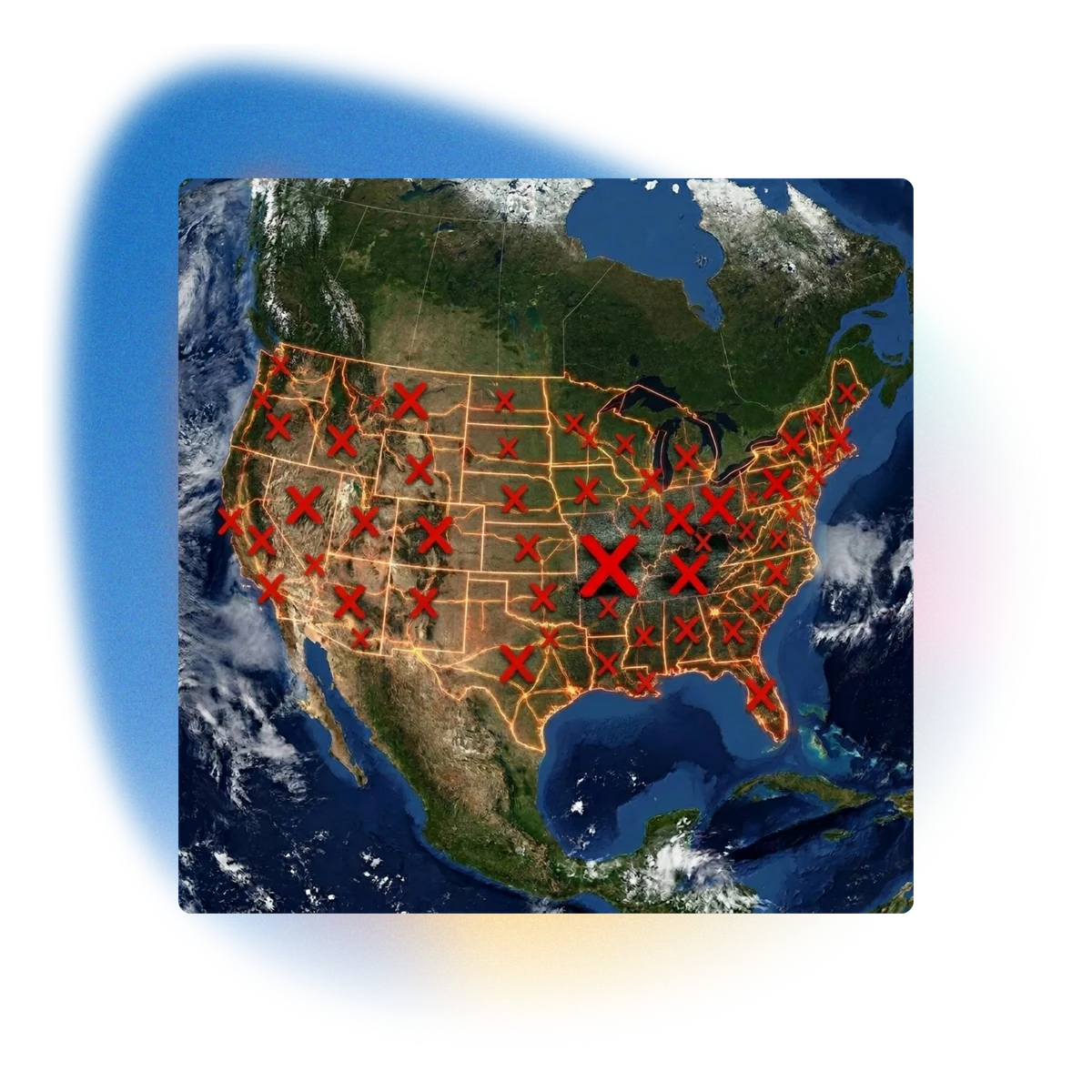
Major carriers are actively decommissioning the copper POTS infrastructure that analog life-safety devices have relied on for decades. The FCC has authorized this transition, and millions of lines are already offline across the country.
For fire panels, elevator phones, and emergency systems, losing that line isn't an operational inconvenience — it's a code compliance failure. NFPA 72 and ASME A17.1 require these devices to maintain a functioning, supervised communication pathway at all times.
Voicelink replaces the POTS line — your analog device stays exactly as it is
No rewiring, no new infrastructure — standard RJ-11 connection, up to 1,000 ft
Maintains the supervised, carrier-managed voice pathway that compliance requires

This page covers how Voicelink solves the life-safety side of the copper sunset. If you want the whole landscape first, the carrier timelines, every replacement path, and what the shut-off means for a building like yours, we built a dedicated guide for exactly that.
An educational resource brought to you by Simplifi.
Most POTS replacement products route analog signals over the public internet. For life-safety applications, that architecture introduces failure points that codes like NFPA 72 and ASME A17.1 specifically require you to avoid.
Signal travels over the public internet — a best-effort, unmanaged network
Subject to congestion, latency, and outages outside your vendor's control
Signal travels through the carrier's managed voice core — MFVN (Managed Facilities-Based Voice Network)
No dependency on public internet routing — equivalent to traditional circuit-switched telephony
Voicelink is a compact RJ-11 to USB adapter. It connects to the Simplifi Connect II router and provides a standard analog output for your existing life-safety device — with no rewiring required.
The Voicelink Smart Adaptor plugs into the USB-A port on the Simplifi Connect II router. The router provides both the voice and data cellular connection — no separate SIM card required for the adaptor.
A standard RJ-11 cable runs from the Voicelink adaptor to your analog device — fire panel, elevator phone, or emergency call box. Supports up to 1,000 feet of cable between the adaptor and the endpoint.
Your existing life-safety device sees a standard dial tone. No firmware changes, no panel reconfiguration. DTMF tone stabilization handles digital signaling. On-board echo cancellation and 16 kHz HD audio maintain call quality.
Voicelink is compatible with standard POTS and PSTN equipment. If your analog life-safety device currently uses a copper line, Voicelink can replace it.
ASME A17.1 requires two-way voice communication between the elevator car and authorized personnel. Voicelink maintains that capability over the carrier voice network, with full bi-directional audio and standard telephony interaction.
Parking garage call stations, campus emergency phones, and building entry call boxes rely on analog dial tone to reach emergency dispatch. Voicelink replaces that line without modifying the endpoint hardware.
Burglar alarm systems, access control dialers, and intercom systems that use POTS for signaling and monitoring are compatible with Voicelink. UL1610, UL985, and UL1023 compliance extends across these use cases.
NFPA 72 requires fire alarm control panels to maintain a supervised communication path to a supervising station. Voicelink provides a carrier-managed voice pathway that aligns with NFPA 72 MFVN requirements.
Two-way emergency communication systems in areas of refuge (required under ADA and fire codes) depend on reliable analog voice pathways. Voicelink is compliant with UL2525, the standard for two-way emergency communications.
HIPAA-compliant fax transmission is supported on most available fax machines. Voicelink's DTMF tone stabilization and 16 kHz HD audio maintain the signal integrity that fax communication requires.
Voicelink operates within the carrier's managed voice core — not the public internet. Each carrier below has independently verified network interoperability, coverage, and performance.
Certification validates network interoperability, priority and preemption capabilities where applicable, and nationwide coverage. FirstNet — the public safety broadband network — provides priority access for first responders and mission-critical applications.
Every Voicelink installation is monitored through Simplifi Cloud. Line data, network health, signal strength, and device status are visible at all times — without requiring a site visit to verify the system is functioning.
Line current, voltage, and impedance measured continuously
Line Load Status LED provides local visual confirmation at the device
Alerts when signal drops or device health changes
Remote management across all deployed units — single portal, any location
Connect, Voicelink, and Contact run on one managed platform. Not sure which combination fits your organization? Answer a few questions and we’ll map the right mix to your situation.
Start a Needs AssessmentTell us what analog life-safety devices you're running and where. We'll review your situation and provide a documented path forward.